Why Seam Placement Actually Matters So Much for Plus-Size Activewear
Quick Answer: Seam placement determines where fabric pulls, bunches, or digs on a curvier body far more than fabric quality alone. Seams positioned to follow the body’s natural curve (rather than cutting straight across it) reduce rolling waistbands, thigh chafing, and visible panty lines — this is often the real difference between two leggings that look identical on a hanger.
You’ve bought two pairs of leggings in the same size from different brands, and one fits beautifully while the other digs and rolls all day. The fabric felt similar in the store. The seams were not.
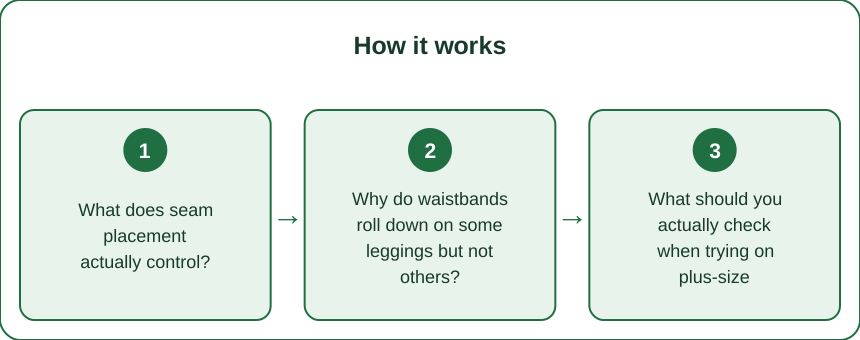
What does seam placement actually control?
Seams determine where fabric is pulled tight versus where it has give — a seam that cuts straight across a curve (rather than following it) creates a pressure point that shows up as digging, rolling, or bunching exactly at that spot, regardless of how stretchy the fabric itself is.
Why do waistbands roll down on some leggings but not others?
Rolling waistbands are usually a seam and panel construction issue, not just a sizing issue — a waistband seamed to curve with the body’s natural waist-to-hip line stays in place far better than a straight-cut band, which has to fight the body’s shape the whole time it’s worn.
What should you actually check when trying on plus-size activewear?
Sit down, squat, and reach overhead — checking seams only while standing misses exactly the movements where poor placement shows up. A well-placed seam stays flat and doesn’t create a visible line or pressure point through any of those three movements.
Finding Activewear That Fits Two Different Sizes
Many bodies carry more size difference between waist and hip than standard size charts assume — brands that offer curve-specific cuts (not just size-scaled versions of a straight-body pattern) tend to handle this better, since the seams themselves are drafted differently, not just resized.
Gym Machine Fit and Seam Placement
Seam placement also affects comfort on gym equipment — a seam sitting directly under a barbell or bench contact point creates discomfort that has nothing to do with strength or technique. Noticing this pattern across different pairs of leggings can point you toward brands that actually consider this in their construction.
FAQ: Plus-Size Activewear Fit Questions, Answered
How can I tell if leggings are curve-specific or just resized?
Check if the brand describes a separate pattern block for curve sizing (not just extended standard sizes) — this is usually stated directly in product descriptions from brands that do it well.
What’s the fastest way to test fit before buying online?
Look at customer photos in reviews specifically for waistband rolling or visible seam lines, since these issues are usually visible even in casual photos.
Does higher price guarantee better seam construction?
Not reliably — some mid-priced brands specifically designed for curve sizing outperform expensive brands that just resize a straight pattern.
TL;DR:
- Seam placement, not just fabric, determines digging, rolling, and bunching on curvier bodies
- Straight-cut seams fight the body’s natural curve; curved seams follow it
- Test fit while sitting, squatting, and reaching — not just standing still
- Curve-specific cuts (a different pattern, not just a resized one) handle this better than standard sizing scaled up
Next time a legging fits oddly, check the seams before blaming the size — they’re often the real story.
See It in Motion
Seen here: High Waist Yoga Leggings with Side Pockets — shop it on bubblelime.com
Keep Reading
This article is for general informational and styling purposes only. Fit, sizing, and product availability may vary.