Why Plus Size Activewear Fits Differently in August Than in March
Quick Answer: Fit changes in summer for three real reasons: skin swells slightly in heat, damp fabric loses some recovery and grips differently, and mild fluid retention is common in hot weather. The result is a waistband that feels tighter and a hem that rides more. Sizing up is rarely the answer - switching to a lighter nylon-rich knit with a wider waistband and flatlock seams usually fixes it without changing size.
The pair that fit beautifully in spring now digs at the waist by noon. Nothing about your body needs explaining. The fabric and the weather are doing most of the work here.
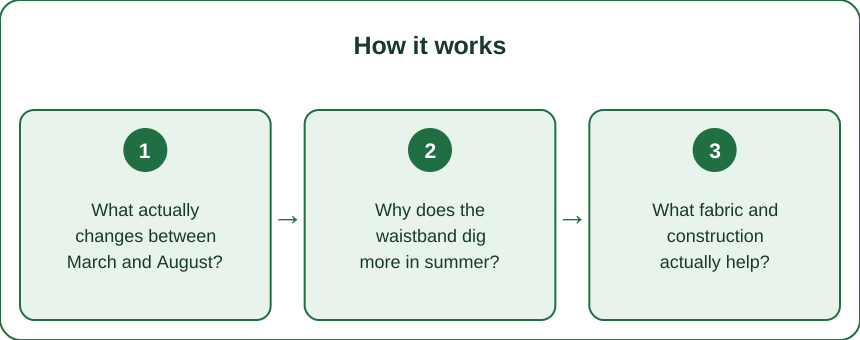
What actually changes between March and August?
Three things happen at once.
Peripheral vasodilation. In heat, blood vessels near the skin open up to shed warmth. That produces a small but real increase in limb volume, which is why rings and shoes feel tighter on hot days.
Fabric behavior. Elastane loses a bit of recovery when it is warm and damp. A waistband that snaps back cleanly at 65F relaxes and then re-tightens unevenly at 90F with sweat in it.
Fluid balance. Mild retention in hot weather is common and normal, particularly around the ankles and midsection late in the day.
None of these is a sizing problem. They are a fabric and construction problem, and that is good news because it is solvable by what you buy rather than by what you do.
Why does the waistband dig more in summer?
Because most compressive waistbands rely on a stiff elastic or a bonded band that has one job: apply consistent pressure. When the tissue underneath expands slightly and the band does not, pressure goes up.
Narrow bands concentrate that pressure into a thin line, which is what you feel as digging. A wider band - 4 inches or more - spreads the same holding force across more area and stops the line from forming.
Look for waistbands described as wide, high-rise and unbanded, meaning the fabric itself is doubled rather than a separate elastic sewn in. Those adapt far better to a body that changes size across a day.
What fabric and construction actually help?
Nylon-rich blends - roughly 70 to 80 percent nylon with spandex - wick faster and dry quicker than polyester-heavy versions, which matters when the fabric is against a large area of skin.
Lighter weight, around 200 to 240 gsm rather than the 280 to 320 gsm that feels luxurious in winter. Heavy compression knits are genuinely hot.
Flatlock seams rather than standard overlocked seams anywhere the fabric touches for a long time, especially inner thigh and waistband.
Gusseted crotch to reduce the seam pile-up that causes wear and chafe in the exact spot that sweats most.
And on inner thigh wear - the fastest fix is a slightly longer inseam. A biker short at 8 to 10 inches puts the wear point below the highest friction zone.
Myth vs Fact: summer fit edition
Myth: If it feels tighter, you should size up. Fact: a size up often solves the waist and creates a new problem - hem sag and inner thigh bunching. Change construction before changing size.
Myth: Compression is always cooler because it is thin. Fact: high-compression fabric is usually denser and hotter. Thin and compressive are not the same thing.
Myth: Sweat wicking fabric prevents chafe. Fact: wicking moves moisture, but friction is what causes chafe. Seam placement and inseam length matter more than the wicking claim on the tag.
Myth: Black is the safest color in summer. Fact: black hides sweat marks best but absorbs the most radiant heat outdoors. Indoors it is the right call; in direct sun, lighter colors are genuinely cooler.
FAQ: Plus Size Summer Fit Questions, Answered
Should I buy a size up just for summer?
Usually not - try a wider, unbanded waistband in a lighter knit at your normal size first. Most people find that solves the digging without introducing hem sag.
What inseam stops inner thigh wear fastest?
An 8 to 10 inch biker short puts the seam below the highest friction area, and it is the single most effective change for most people.
Why do my leggings roll down more when I sweat?
Damp fabric loses grip against skin and the elastane relaxes slightly, so a band that was borderline becomes a roller. A wider band and a slightly firmer waist fit fix it.
TL;DR:
- Summer fit changes come from heat-driven vasodilation, damp fabric losing recovery, and mild fluid retention - not from anything you did wrong.
- Fix construction before size: a wider unbanded waistband, lighter nylon-rich knit, flatlock seams, gusseted crotch.
- An 8 to 10 inch inseam is the fastest solution to inner thigh wear.
- Black hides sweat but absorbs sun; choose by whether you train indoors or out.
The pair that changed was the fabric, not you. Buy for the weather the way you already buy for the workout, and the same size keeps working all year.
See It in Motion
Seen here: High Waist Embossed Yoga Leggings with Side Pockets — shop it on bubblelime.com
Keep Reading
This article is for general informational and styling purposes only. Fit, sizing, and product availability may vary.