Why Plus-Size Leggings Pill on the Inner Thigh First - and Which Fabrics Survive It
Quick Answer: Pilling on the inner thigh is caused by repeated friction breaking short fibers loose from the fabric surface, which then tangle into balls. It happens there first because that is where fabric rubs fabric with every step. The fabrics that resist it best are tightly knit, high-filament nylon-elastane blends with a smooth face; the ones that fail fastest are brushed polyester, soft-handle cotton blends, and anything described as buttery with a raised surface.
The frustrating part is that the softest fabrics on the rack are almost always the ones that will pill first, because softness and pill resistance come from opposite construction choices.
Why does the inner thigh always go first?
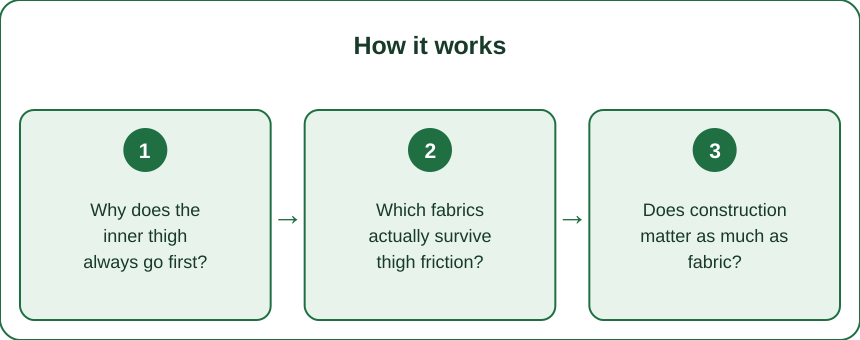
Because it is the only place on a legging where the garment abrades against itself continuously.
The mechanics. Every stride brings the inner thighs into contact. On a body where the thighs touch, that contact is not incidental - it happens thousands of times per walk, under pressure, with the fabric stretched. Friction breaks short fiber ends free of the yarn. Those loose ends tangle with neighbors, roll into balls, and stay attached by a few strong fibers.
Why plus-size garments hit this harder:
- Greater contact area and greater contact pressure, which multiplies friction cycles
- Fabric under more tension, which exposes more fiber surface and makes fibers easier to dislodge
- Panel and seam placement, which frequently puts a seam directly in the highest-friction zone on styles not designed with this in mind
The counterintuitive part. Stronger fibers can make pilling worse, not better. A weak fiber breaks and falls away; a strong one stays attached and accumulates. This is exactly why polyester pills persistently while a wool or cotton pill often sheds on its own - the polyester pill is anchored by a fiber that will not snap.
What determines how quickly it happens:
- Yarn type. Spun yarn, made from short staple fibers, has thousands of fiber ends available to work loose. Filament yarn is continuous and has almost none
- Knit density. A tight knit holds fibers in place; an open knit lets them migrate
- Surface finish. Brushing, sanding or peaching a fabric deliberately raises fiber ends to create softness. You are buying pre-loosened fibers
Which produces the rule that explains most disappointing purchases: the buttery hand-feel that sells the legging is manufactured by damaging the fabric surface on purpose.
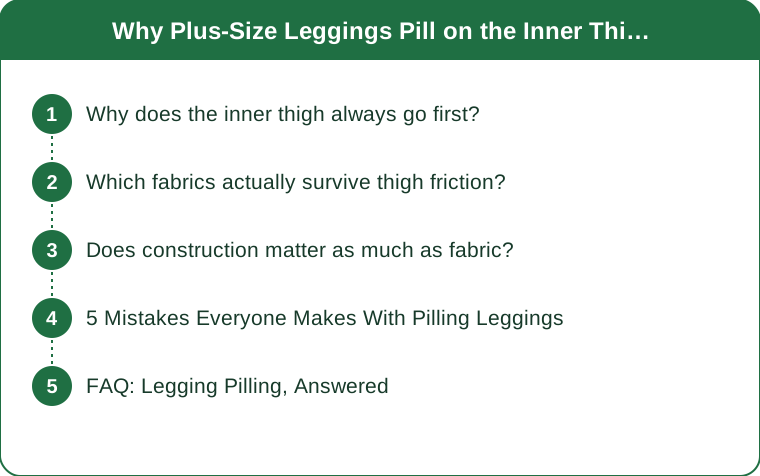
Which fabrics actually survive thigh friction?
There is a clear hierarchy, and it does not correlate well with price.
Best resistance:
- High-filament nylon with elastane, tightly knit, smooth-faced. Nylon has better abrasion resistance than polyester and the filament structure gives few loose ends. This is the most reliable choice for anyone who pills through leggings
- Dense polyester-elastane with a smooth flat face, particularly the compressive fabrics used in performance leggings. Less soft, considerably more durable
Moderate resistance:
- Standard poly-spandex jersey in mid to heavy weight. Fine in a dense knit, poor in a thin one
- Recycled polyester blends, which vary enormously by construction. Weight and knit density predict performance better than the recycled content does
Poor resistance:
- Brushed or peached polyester, including most buttery-soft leggings. The raised surface is loose fiber by design
- Cotton-spandex blends. Cotton is a short staple fiber, so there are countless ends available
- Anything lightweight with visible surface texture or a slightly fuzzy hand
How to assess a fabric before buying:
- Rub the fabric against itself, firmly, for ten seconds. If you feel it grab rather than glide, it will pill
- Hold it to the light. Density is visible - you should not see much through it stretched
- Read the weight if listed. Anything under about 200 gsm in a legging is likely to be too thin to resist friction at the thigh
- Feel for the smooth face. Excellent pill resistance feels cool and slick rather than cozy
The honest tradeoff. The pill-resistant options feel less luxurious. You can have buttery or you can have durable at the inner thigh, and no brand has solved this - which is worth knowing before paying premium prices expecting both.

Does construction matter as much as fabric?
Nearly, and it is easier to check.
Seam placement. A seam sitting in the friction zone becomes the failure point.
- Look for gusseted crotch construction - a diamond or triangular panel that moves the seam intersection away from the highest-friction area. This is the single most useful construction feature for this problem
- Flat seams distribute friction better than raised overlocked ones
- Bonded or seamless inner thigh construction eliminates the issue entirely, where available
Panel design. Some styles place a vertical panel seam directly along the inner thigh, and that seam abrades against the other leg with every step. Check where the seams run before buying, which takes five seconds on a product photo.
Fit, which cuts both ways:
- Too loose means fabric folds and bunches, and folded fabric abrades against itself much faster
- Too tight means the knit is stretched thin, exposing more fiber and reducing density exactly where density is needed
- Correct fit means smooth, unstretched-looking fabric with no folds at the inner thigh when standing
Length matters more than people expect. A full-length legging distributes movement over a longer fabric run than a short, which is one reason 7/8 and full-length styles often outlast biker shorts in the same fabric.
What to do with the pair you already own. Pilling is not reversible, but it is removable: a fabric shaver used on the flat, stretched fabric takes the pills off cleanly. Do not use a razor - it catches the elastane and creates holes. Removing pills also removes the fiber that would have caught the next ones, so it genuinely slows the progression.
5 Mistakes Everyone Makes With Pilling Leggings
1. Blaming the price. Expensive leggings pill readily if they use a brushed surface, and mid-price leggings resist beautifully if they use dense filament nylon. Construction predicts pilling; price does not.
2. Washing them with towels and denim. Abrasion during washing is a major pilling source, and towels and denim are the two worst offenders in the machine. Wash leggings with other smooth synthetics, inside out, in a mesh bag.
3. Using fabric softener to fix the feel. Softener coats fibers, reduces the fabric’s ability to wick, and does nothing for pilling. On performance fabric it actively degrades the properties you paid for.
4. Tumble drying. Heat degrades elastane and tumbling is a friction cycle by definition. Air drying leggings roughly doubles their usable life, and this is the highest-impact single habit change available.
5. Shaving pills off with a razor. It seems like the obvious tool and it cuts through the elastane threads that hold the knit together, creating thin patches and eventually holes. A proper fabric shaver with a guard costs very little and does not do this.
The pattern across all five: pilling is mostly determined before purchase, and everything after purchase either slows it down or accelerates it. Almost nothing reverses it.
FAQ: Legging Pilling, Answered
Why do only the inner thighs pill?
That is the one area where the garment rubs against itself with every step, under pressure and while stretched. It is a friction map, not a quality map.
Which fabric pills the least?
Tightly knit, high-filament nylon-elastane with a smooth face. Nylon resists abrasion better than polyester and filament yarns have few loose fiber ends.
Does buttery-soft fabric always pill?
Usually faster than smooth fabric, yes. Buttery texture is typically created by brushing the surface, which raises fiber ends - exactly what pilling needs.
Can I fix leggings that already pill?
You can remove the pills with a fabric shaver, which restores appearance and slows further pilling. Never use a razor - it cuts the elastane and creates holes.
Does washing inside out actually help?
Yes, meaningfully. It moves the abrasion of the wash cycle to the inside surface, along with a mesh bag and skipping the dryer.
Is a gusset worth looking for?
Strongly. A gusseted crotch moves the seam intersection out of the highest-friction zone and reduces both pilling and seam failure there.
TL;DR:
- Inner thigh pilling is friction between fabric and fabric, so it is a construction problem rather than a quality failure
- Dense, smooth-faced, high-filament nylon-elastane resists best; brushed buttery finishes and cotton blends fail fastest
- Look for a gusseted crotch and check where the seams run before buying
- Wash inside out in a mesh bag with other synthetics, skip fabric softener, and air dry
- A fabric shaver removes existing pills safely; a razor cuts the elastane and ruins the knit
Softness on the rack and durability at the thigh come from opposite construction choices. Decide which you actually want before you pay.
See It in Motion
Seen here: High Waist Yoga Leggings with Side Pockets — shop it on bubblelime.com
Keep Reading
This article is for general informational and styling purposes only. Fit, sizing, and product availability may vary.