Why Compression Leggings Feel Different Above and Below the Knee
Quick Answer: Most leggings are graded by increasing panel width fairly evenly from hip to ankle, but body measurements do not scale evenly - thigh circumference grows much faster across sizes than calf circumference does. The result in larger sizes is genuine compression at the thigh and noticeably less at the calf. Look for leggings with separate calf shaping or a ribbed lower panel rather than sizing down.
It is one of the most common plus-size activewear complaints and it has almost nothing to do with the wearer’s proportions being unusual.

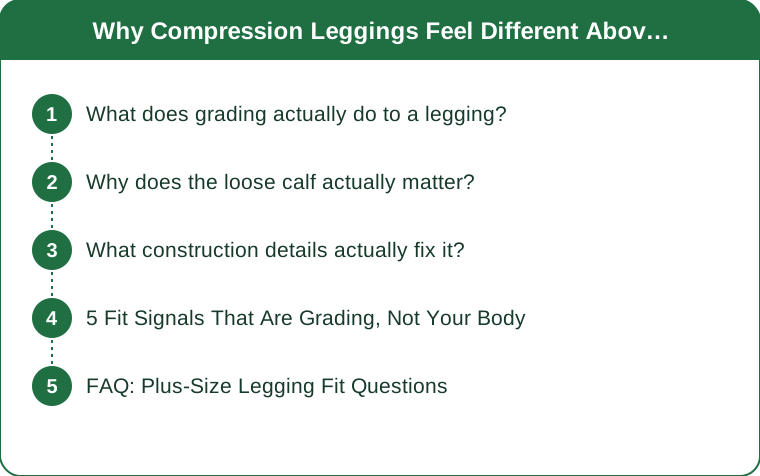
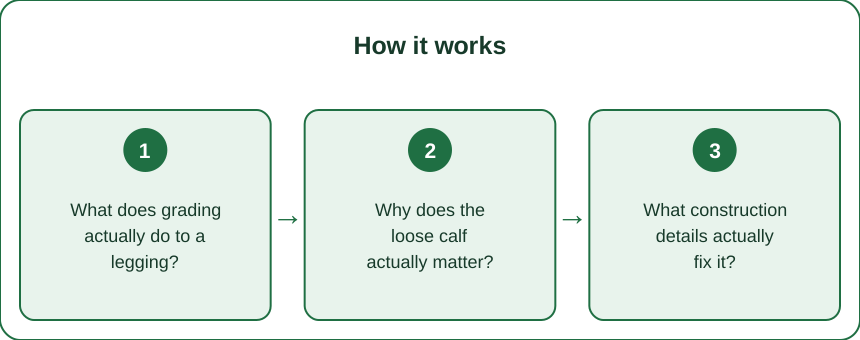
What does grading actually do to a legging?
Grading is the process of scaling a base pattern up and down through the size range, and most of it is done with fixed proportional rules.
A typical grade adds a set amount to each measurement point per size - perhaps 2 inches at the hip, 1.5 inches at the thigh, and 0.75 inches at the calf per size step. Those ratios are set once, based on a fit model, and applied all the way up.
The problem is that human bodies do not scale along those ratios. Across a size range, thigh circumference typically increases faster than calf circumference, and hip faster still. Anthropometric survey data consistently shows the lower leg being one of the least variable measurements across body sizes.
So a grade that is accurate at the fit model’s size drifts as it moves up. By four or five sizes above the base, the calf panel has been widened more than most bodies require, while the thigh panel may still be under-sized relative to the same bodies.
The felt experience is exactly what people describe: the legging grips hard at the thigh and sits loose from the knee down. Neither is a fit failure by the wearer. It is accumulated grading drift.
Why does the loose calf actually matter?
Because compression garments only do their job when they maintain contact, and because a loose lower panel migrates.
True graduated compression - the kind used medically - works by applying higher pressure distally and lower pressure proximally, which supports venous return. A legging that does the opposite, gripping the thigh and loosening at the calf, produces the reverse gradient. It will not cause harm in most cases, but it does nothing useful for circulation and it can feel like a band at the top of the thigh.
More practically, a loose calf panel is the reason for two specific annoyances. The hem rides up during running or stairs, because there is nothing holding it in place and the fabric bunches behind the knee. And the fabric wrinkles at the ankle, which is the visual tell that makes a legging look ill-fitting even when it fits everywhere else.
There is also a wear-rate consequence. A panel that shifts against itself abrades faster. This is part of why the fabric behind the knee often pills before anywhere except the inner thigh.

What construction details actually fix it?
Four things to look for, in descending order of how much difference they make.
A separate calf panel or seam below the knee. If the legging has a horizontal or curved seam under the knee, the maker has almost certainly shaped that section independently rather than just extending the thigh panel down. This is the strongest single indicator.
Ribbed or higher-elastane fabric at the lower leg. A ribbed lower panel contracts to the leg regardless of how it was graded, which effectively solves the problem with material rather than pattern.
A contoured or shaped ankle cuff, not just a folded hem. A cuff with its own elastic holds the hem in position and prevents the ride-up.
Cropped or 7/8 lengths. Slightly counterintuitive, but a 7/8 legging ends at the narrowest part of the calf, above the ankle, where the grading drift is smallest. Many people who fight full-length fit find 7/8 simply works.
What does not fix it: sizing down. Sizing down to tighten the calf makes the thigh and hip too tight, which is where compression was already adequate. You end up with a waistband that rolls and a thigh seam that digs, in exchange for a calf that fits.
5 Fit Signals That Are Grading, Not Your Body
-
Tight at the thigh, loose at the calf. The classic grading drift signature described above.
-
Waistband gapping at the back while fitting at the front. Rise is graded as a single number, but the difference between front rise and back rise grows across sizes. Larger sizes frequently need proportionally more back rise than the grade provides.
-
Inseam seams that spiral toward the front. When the leg panels are graded unevenly, the inseam rotates as it descends. A visible twist in the side seam by mid-calf is a construction artifact.
-
The crotch seam sitting low. Body rise does not increase at the same rate as hip circumference, so larger sizes often get more crotch depth than needed.
-
Sports bra band fitting but cups not. Same principle in a different garment - band and cup are graded on different rules and drift apart at the ends of the range.
The common thread: these are all symptoms of a base pattern being stretched past the range it was designed for. Brands that draft separate patterns for the extended size range - rather than grading one pattern across everything - avoid most of them, and it is worth finding out which ones do.
FAQ: Plus-Size Legging Fit Questions
Should I get leggings altered?
Calf and ankle taken in is one of the few genuinely worthwhile activewear alterations, and a tailor who works with knits can do it for a modest cost. Ask specifically for a stretch stitch - a straight stitch will pop the first time you squat.
Are compression leggings supposed to leave marks?
Light temporary marks at the waistband are normal. Deep marks that persist for more than about twenty minutes, or any numbness or tingling, mean it is too tight. That is a comfort and circulation issue worth taking seriously.
Does fabric weight change the grading problem?
It changes how much you notice it. A heavier, higher-compression fabric conforms less and reveals fit issues more. A lighter four-way stretch fabric masks moderate drift, at the cost of less support.
TL;DR:
- Leggings are graded with fixed proportional rules, but thigh circumference grows faster across sizes than calf does.
- The result in larger sizes is a legging that compresses at the thigh and hangs at the calf - a pattern issue, not a body issue.
- Loose lower panels ride up, wrinkle at the ankle, and abrade faster behind the knee.
- Look for a seam below the knee, ribbed lower fabric, a shaped ankle cuff, or simply a 7/8 length.
- Sizing down trades an acceptable thigh fit for a calf fix and is rarely worth it.
Brands that draft a separate pattern for extended sizes rather than grading one pattern upward solve nearly all of this, and it is a fair question to ask before you buy.
See It in Motion
Seen here: Super High Waist Embossed Yoga Leggings with Inner Pocket — shop it on bubblelime.com
Keep Reading
This article is for general informational and styling purposes only. Fit, sizing, and product availability may vary.