What Actually Changes in Your Activewear When Your Weight Shifts Ten Pounds
Quick Answer: Compression garments and structured sports bras notice a ten-pound shift first, because they work by applying a specific pressure and small circumference changes alter that pressure meaningfully. Leggings with a wide waistband, loose tops, and anything with substantial stretch tolerate the change well. The pieces to check first are band-based bras, high-compression leggings, and anything with a fixed non-stretch component like a zip or a woven panel.
Weight moves. It moves seasonally, it moves with training, it moves with medication, sleep, and stress, and it moves within a single month for reasons nobody fully controls. What is genuinely useful to know is which parts of your drawer are about to become uncomfortable and which are entirely unbothered.

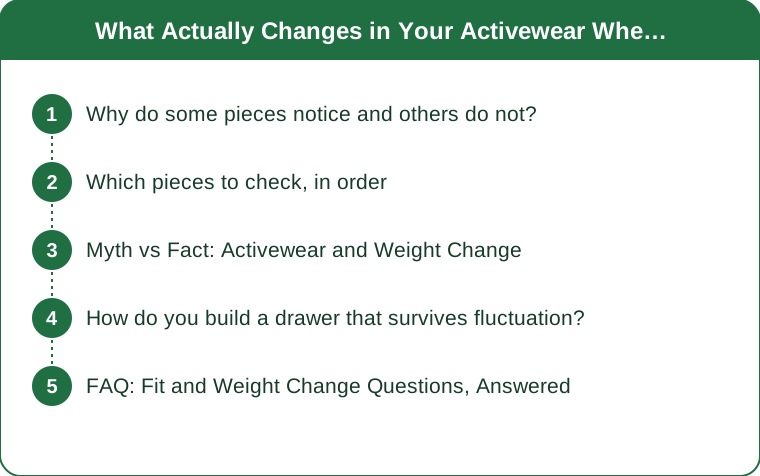
Why do some pieces notice and others do not?
It comes down to how far a garment is from its designed pressure.
Compression garments work within a narrow band. A high-compression legging is engineered to apply a specific pressure at a specific circumference. Stretch the fabric further and pressure rises quickly - the relationship is not linear, it steepens. A relatively small circumference increase can push a comfortable garment into an uncomfortable one, and the same in reverse produces a garment that no longer supports.
Loose and moderate-stretch garments have enormous tolerance because they are nowhere near their limit. A relaxed tee, a mid-compression legging worn at a comfortable size, an oversized sweatshirt - all of these have several inches of unused range.
Fixed components have zero tolerance. A zip, a woven waistband panel, a non-stretch drawcord channel, a bra band at its last hook. These do not accommodate anything, and they are usually the first thing that becomes noticeable.
Where the change lands matters as much as how much. Ten pounds distributed across the whole body is a small circumference change everywhere. Ten pounds concentrated in the torso is a substantially larger change at the ribcage and bust, which is exactly where bras have the least tolerance.
And there is a timing effect people miss. Muscle gained through training can increase thigh and glute circumference while overall weight stays flat, which makes leggings tighter with no change on the scale at all. This confuses a lot of people into thinking a garment shrank.
Which pieces to check, in order
Work through the drawer in this sequence rather than trying everything on.
Check first - these change fastest:
- Sports bras with a band. The band does the majority of the support work, and band fit is the least tolerant measurement in your entire wardrobe. A band that was on the middle hook and is now on the loosest, or one that has run out of hooks entirely, needs replacing rather than tolerating.
- High-compression leggings, particularly anything sold for running or as shaping wear.
- Anything with a zip - jackets, zip-through tops, pocketed shorts.
- Cycling shorts with a chamois, where position of the pad relative to your body is fit-dependent.
Check second:
- Leggings with a narrow waistband, which have less surface area to distribute pressure.
- Fitted tanks and long-sleeves at the bust and upper arm.
- Anything you already found slightly snug before.
Do not bother checking:
- Oversized and relaxed-fit tops.
- Wide-waistband leggings in a moderate compression fabric.
- Anything with a drawstring.
- Shorts with an elastic waist and a relaxed leg.
A quick screening test: put the piece on and do three squats and one overhead reach. Most fit problems reveal themselves in those two movements, and the ones that do not are unlikely to bother you in practice.

Myth vs Fact: Activewear and Weight Change
Myth: If your leggings feel tighter, you have gained weight. Fact: Fabric recovery degrades with wear and washing, which changes fit in both directions - a worn pair can feel tighter at the waistband as the elastic loses recovery while feeling looser at the knee. Muscle gain, fluid retention, time of day, and where you are in your cycle all shift circumference by a meaningful amount too.
Myth: You should buy a size up when your weight is changing. Fact: Oversized compression wear does not support and often bunches and chafes, which is worse than a correctly fitted piece you replace later. Buy for the body you have now in the pieces that need precision, and buy generously only in the categories that tolerate it.
Myth: Sports bras stretch out to fit you. Fact: They stretch out over their lifespan and lose support, which is different from adapting to a new size. A band that has stretched enough to accommodate a change has also lost the tension that made it supportive.
Myth: All activewear fabric has the same stretch. Fact: Recycled polyester blends, nylon-elastane, and cotton-blends behave differently, and the same nominal fibre content can vary hugely in recovery. This is why two pairs in the same size from different brands respond so differently to the same body, and why brand consistency is worth more to a body that fluctuates than any individual garment.
Myth: Weight has to be stable before it is worth buying good pieces. Fact: Waiting means training in ill-fitting kit, which is genuinely uncomfortable and is a real reason people skip sessions. Buy a small number of well-fitting pieces in the tolerant categories and replace the precision items as needed.
How do you build a drawer that survives fluctuation?
Structurally, so that a ten-pound shift costs you two purchases rather than twelve.
Concentrate spending on tolerant categories. Wide-waistband leggings in moderate compression, relaxed tops, zip-free layers. These are the pieces that will still work across a range, so they are worth buying well.
Treat bras as consumables. They wear out on a timeline anyway - most sports bras lose meaningful support within a year of regular use and washing. Budgeting for one or two replacements a year makes fluctuation a non-event rather than a crisis.
Buy bras with more hooks. Four-hook bands give you far more usable range than two-hook, and a band that starts on the tightest hook has room to move in only one direction.
Prefer drawstrings and wide bands over narrow elastic. A wide band distributes pressure over more surface area, which means the same circumference change produces less noticeable pressure change.
Keep one comfortable set at each end. A set that fits when you are at the higher end and one for the lower end, both stored rather than discarded. This is much cheaper than replacing a full drawer twice, and it removes the whole emotional weight from a morning where nothing fits.
And check seam placement when buying, because seams that sit in a high-movement area - inner thigh, under the bust, across the shoulder - become uncomfortable much faster than well-placed ones when pressure increases.
FAQ: Fit and Weight Change Questions, Answered
Do leggings shrink or did I gain weight?
Both happen, and there is a third option. Fabric loses recovery with wear, which changes how it fits without changing its size. Hot washing and tumble drying genuinely can shrink some blends. And muscle gain increases thigh circumference with no scale change at all.
Should I size up in activewear if my weight fluctuates?
In tolerant categories - relaxed tops, wide-waistband leggings - buying with a little room is sensible. In compression wear and sports bras it is not, because those garments only work within a narrow pressure range and an oversized one bunches and fails to support.
How often should sports bras be replaced?
Roughly every six to twelve months with regular use, sooner if the band has migrated to the tightest hook or the fabric no longer snaps back. Support loss is gradual, so it is usually noticed long after it began.
What is the first sign activewear no longer fits?
Usually the waistband rolling or the bra band riding up at the back. Both indicate the garment is being pushed off its intended position by pressure it was not designed for, and both are more reliable signals than how a piece looks.
TL;DR:
- Compression wear and band-based bras notice small shifts first; loose and wide-band pieces barely notice at all.
- Fixed components - zips, woven panels, the last bra hook - have zero tolerance.
- Muscle gain changes thigh circumference with no scale change, which fools a lot of people.
- Spend on tolerant categories, treat bras as consumables, and buy four-hook bands.
- Keep one comfortable set at each end rather than replacing a whole drawer twice.
Most of a fluctuating wardrobe is fine. It is usually two or three precision pieces doing all the complaining, and knowing which ones saves both money and a bad morning.
See It in Motion
Seen here: Crewneck Short Sleeve Workout T-Shirt — shop it on bubblelime.com
Keep Reading
This article is for general informational and styling purposes only. Fit, sizing, and product availability may vary.