Why Seam Placement Matters More Than Fabric Stretch for Plus-Size Activewear Comfort
Fabric stretch percentage gets treated as the main comfort factor in plus-size activewear shopping, but seam placement is often the more decisive factor for how a garment actually feels in motion on curvier proportions, and it gets far less attention in most buying guides. Here’s why seam placement matters as much as it does, and what to actually check for.

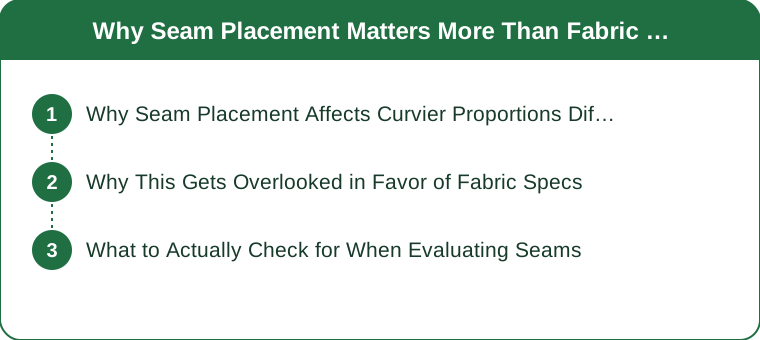
Why Seam Placement Affects Curvier Proportions Differently
The real mechanism: the the-a-seam-positioned-at-a-high-friction-contact-point-on-a-curvier-frame-creates-rubbing-regardless-of-how-stretchy-the-fabric-is (the a seam sitting directly at an inner-thigh or underarm contact point creating friction through repeated movement no matter how much the surrounding fabric itself stretches, since the seam is a fixed structural line rather than a stretch surface — the a-seams-fixed-position-not-the-fabrics-stretch-percentage-determines-whether-it-becomes-a-friction-point), and the reframe (the actual chafing risk being a placement issue specific to where seams fall on a given body’s contact points, not primarily a fabric quality issue).

Why This Gets Overlooked in Favor of Fabric Specs
The gap: the the-fabric-stretch-percentage-is-an-easy-marketed-number-while-seam-placement-requires-trying-the-garment-on (the a stretch percentage being a simple, easily marketed spec that’s easy to compare across products, while assessing seam placement’s actual effect requires physically trying the garment on and moving in it, a step most buying guides skip — the the-easier-to-market-spec-crowds-out-the-harder-to-assess-but-more-decisive-factor), and the frame (the marketing emphasis on stretch percentage crowding out attention to the factor that actually predicts comfort on a curvier frame in motion).
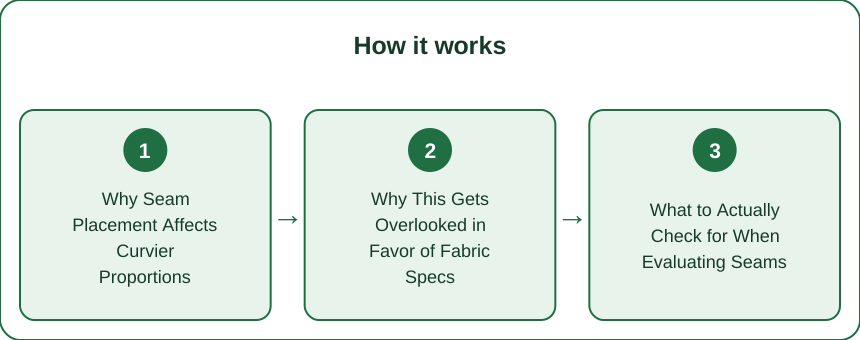
What to Actually Check for When Evaluating Seams
The practical check: the the-flat-lock-or-bonded-seams-at-known-high-friction-points-specifically-reduce-chafing-risk-more-than-stretch-percentage-does (the specifically looking for flat-lock or bonded seam construction at the inner thigh and underarm areas, a targeted construction detail that addresses the actual friction risk directly rather than relying on general fabric stretch to compensate — the checking-seam-construction-at-specific-friction-points-is-a-more-targeted-fix-than-relying-on-fabric-stretch-alone), and the frame (the real evaluation checklist prioritizing seam construction at known friction points over stretch percentage, since the seam is what actually determines whether those specific points chafe in motion).
A seam sitting at an inner-thigh or underarm contact point creates friction through repeated movement regardless of how stretchy the surrounding fabric is, since the seam itself is a fixed structural line rather than a stretch surface — which means seam placement, not fabric stretch percentage, is often the more decisive factor for comfort on curvier proportions. Stretch percentage gets more marketing attention mainly because it’s an easy number to compare, while assessing seam placement actually requires trying the garment on and moving in it, a step most buying guides skip. Checking specifically for flat-lock or bonded seam construction at known high-friction points is a far more targeted fix for chafing than relying on fabric stretch alone.
See It in Motion
Seen here: Round Neck Long Sleeve Athletic T-Shirt — shop it on bubblelime.com
Keep Reading
This article is for general informational and styling purposes only. Fit, sizing, and product availability may vary.