The Complete Guide to Preventing Chafing in Plus Size Activewear
Quick Answer: Chafing needs three ingredients - friction, moisture, and time - and removing any one of them stops it. The reliable stack: smooth-faced synthetic fabrics with flat seams in the four risk zones (inner thigh, bra band line, waistband edge, underarms), fit that is snug enough not to migrate, an anti-chafe balm on skin-to-skin areas before you start, and never sitting around in soaked kit afterward. Cotton anywhere near a risk zone in August is how most preventable chafing happens.
Chafing gets talked about as an inevitability at higher sizes, which is both unkind and untrue. It is a mechanical problem - skin plus friction plus salt - and mechanics respond to engineering. Plenty of straight-size marathoners chafe bloody and plenty of plus size lifters never chafe at all. The difference is not the body; it is the system. Here is the system.

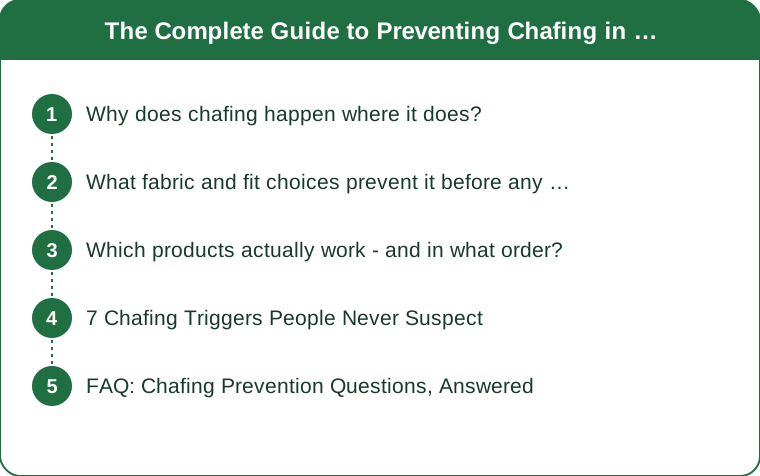
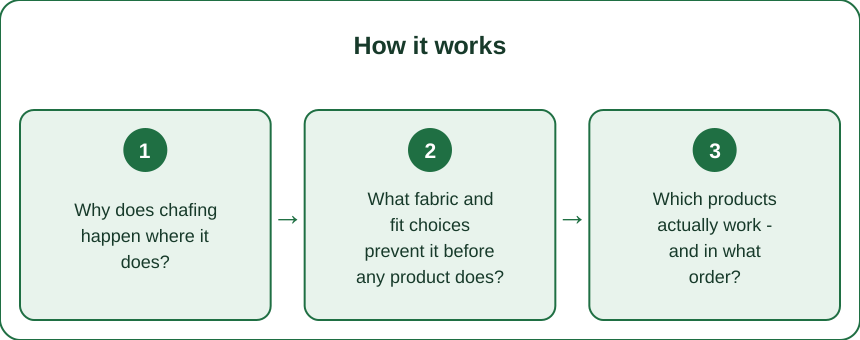
Why does chafing happen where it does?
Every chafing spot on your body is explained by one equation: friction, times moisture, times repetitions.
Friction comes in two forms that need different fixes. Skin-on-skin friction - inner thighs, underarms, beneath the bust - happens where surfaces move against each other thousands of times per session. Fabric-on-skin friction happens where a seam, an edge, or a bunched fold rubs the same line of skin repeatedly: the bra band, the waistband edge, a leg hem that keeps riding.
Moisture makes everything worse. Wet skin is softer and more fragile - it abrades in a fraction of the repetitions dry skin tolerates. This is why the same walk that is fine in dry October leaves marks in humid August, and why the worst chafing days are hot ones. Sweat also leaves salt behind as it dries, and salt crystals on skin act like a fine abrasive on every subsequent rub.
Repetitions are the multiplier you control with time and gait. A ten-minute errand rarely chafes; the same friction over ninety minutes crosses the damage threshold. Anything that increases contact - a longer stride, a bouncing strap, kit that has migrated out of place - raises the rep count on one patch of skin.
The four zones to defend, in order of frequency: inner thighs, the line under and around the sports bra band, the waistband edge (especially where it folds over), and the underarm where an arm swings past a seam or the torso. Map your own pattern after a sweaty session - faint pink lines are tomorrow’s problem announcing itself politely - and you will find your personal defense priorities are usually just two of the four.
What fabric and fit choices prevent it before any product does?
Most chafing is prevented at the drawer, not the bathroom cabinet.
Fabric first: smooth, synthetic, sweat-moving. Nylon and polyester blends with elastane slide against skin and against themselves, and they move sweat off the surface. Cotton does the opposite - it drinks sweat, stays wet, gets heavy, and turns its own soaked fibers into sandpaper. Cotton leggings, cotton underwear under leggings, and thick cotton waistbands are behind a remarkable share of preventable chafing.
Seams decide the fabric-on-skin zones. Look for flatlock or bonded seams - stitched flat rather than pinched into a ridge - anywhere a seam crosses a risk zone. Run a finger along the inner-thigh seam before buying: if you can feel a ridge in the store, your skin will find it by mile two. Tag-free or printed labels beat sewn tags at the waistband.
Fit: snug enough to stay put. Migration is the hidden chafing engine - a leg hem that rides up turns a covered thigh into a skin-on-skin thigh, and kit that slides gets repositioned by friction, over and over. Squat-proof leggings that genuinely hold their place, a bra band level and firm, and shorts with a silicone-free but grippy hem all remove repetitions. Sizing up for comfort backfires when it introduces loose fabric that folds - a fold is a ridge you carry with you.
Length is a strategy. A longer inseam is the single most effective inner-thigh defense: bike shorts or high-waisted leggings put a smooth synthetic layer exactly where skin would meet skin. Under dresses and skirts, a soft short does the same job invisibly - this is the oldest trick in the plus size playbook because it works every single time.
One warm-weather note for late summer: buttery-soft lightweight fabrics feel wonderful but some thin knits shift more as they dampen. For long sweaty sessions, a slightly more structured knit that stays anchored beats the softest thing you own.

Which products actually work - and in what order?
Products are the final layer, for the zones that fabric and fit cannot fully cover. The field guide:
Anti-chafe balm sticks are the workhorse. Glide-on balms lay down a slick, durable film that lowers the friction coefficient of skin dramatically. Apply before the session to clean, dry skin - inner thighs, under the bra band, anywhere with a history. One application survives about an hour of heavy sweat; carry the stick for anything longer. They wash off with soap and do not stain most technical fabrics.
Powders suit dampness-driven spots. Where the problem is more moisture than movement - under-bust in humidity, lower back under a waistband - a talc-free body powder keeps skin surfaces dry and slippery. Powder and balm fight each other in the same spot; choose per zone, not per outfit.
Petroleum jelly works but migrates. It is cheap and effective for short sessions, but it transfers onto and eventually through fabric, and it holds onto technical fibers through the wash. Fine for the walk; think twice before it meets your favorite set.
Thigh bands are situational. Lace or elastic thigh guards genuinely help under skirts and dresses, with the honest caveat that staying up depends on getting the size exactly right - a rolling band is a new friction line. Under leggings they are redundant; the leggings are already the solution.
Aftercare matters as much as prevention. Post-session: rinse the salt off sooner rather than later, pat dry, and put a plain barrier ointment - zinc oxide or similar - on anything pink. Then the two rules of the healing window: keep the area dry, and do not re-chafe it tomorrow; rotate to an activity that spares the spot for a day or two. Skin heals fast when you stop reopening the argument. Raw, broken, or repeatedly infected skin deserves a clinician, not a stronger balm - this is general information, not medical advice.
7 Chafing Triggers People Never Suspect
1. Fabric softener. The waxy film it leaves on technical fabric ruins sweat-wicking, so kit stays wetter, longer - and wet skin chafes at a fraction of the usual friction. If chafing appeared out of nowhere, check what changed in the laundry.
2. Sunscreen mixed with sweat. Some sunscreens emulsify with sweat into a slick that then dries tacky, adding grab exactly where skin meets skin. Apply early so it sets, and keep the chafe balm on top of, not under, the sunscreen line.
3. The folded-over waistband. Folding a high-waisted band down doubles the fabric into a rolling ridge that saws gently at the same line of skin all session. If the rise is wrong, fix the rise, not the fold.
4. A bouncing bag or pack strap. Crossbody bags and hip packs add a moving friction line that ignores all your careful clothing choices. On long walks, stabilize the strap or move it between zones every twenty minutes.
5. Sitting around in wet kit. The workout ends; the moisture does not. Coffee after class in a soaked sports bra is fifteen bonus minutes of soft, salty, compressed skin. Change first, socialize second.
6. Yesterday’s salt. Kit re-worn without washing carries dried salt crystals - abrasive dust positioned exactly on your risk zones. Rewearing barely-worn leggings is fine; rewearing sweated-in ones is a chafing appointment.
7. The almost-right bra. A band that is slightly loose does not just under-support - it travels, and a traveling band is a friction saw. If the chafe line traces your band, the answer is a fitting, not a balm.
FAQ: Chafing Prevention Questions, Answered
What is the fastest fix for inner thigh chafing?
Cover the contact: bike shorts or leggings with a smooth synthetic inner face, plus a swipe of anti-chafe balm for sessions over an hour. That combination resolves the large majority of inner-thigh cases immediately - it is barrier engineering, and it works the first time.
Do anti-chafing thigh bands actually stay up?
Good ones do when sized precisely to your thigh measurement - measure where the band will sit, not your usual size letter. They earn their place under dresses and skirts; under leggings or shorts they are solving a problem the garment already solved.
Is chafing a sign my activewear does not fit?
Sometimes, and the chafe map tells you. A line under the bra band means band fit; a waistband-edge line means rise or size; thigh chafing in leggings that ride up means the inseam or grip is failing you. Chafing purely from skin-on-skin in correctly fitting kit is not a fit failure - it is a missing barrier.
Is it chafing or heat rash?
Chafing is a friction burn: a defined stripe or patch exactly where things rub, stinging in the shower. Heat rash is blocked sweat glands: pinpoint bumps, often somewhere friction cannot reach, prickling rather than stinging. Chafing wants barriers and dryness; heat rash wants cooling and loose airflow - treating one as the other is why it lingers.
TL;DR:
- Chafing equals friction times moisture times repetitions - remove any factor and it stops.
- Defend four zones: inner thighs, bra band line, waistband edge, underarms.
- Smooth synthetics with flat seams beat cotton everywhere; longer inseams are the inner-thigh cheat code.
- Balm before, rinse and barrier ointment after, and never marinate in wet kit.
- New mystery chafing is usually laundry, sunscreen, a strap, or a stretched-out band - check the boring suspects first.
Chafing is not feedback about your body. It is feedback about a friction system, and you are allowed to just engineer it out.
See It in Motion
Seen here: UPF 50+ Racerback Yoga Tank Top — shop it on bubblelime.com
Keep Reading
This article is for general informational and styling purposes only. Fit, sizing, and product availability may vary.