The Curvy Body Proportion Rule Most Sizing Guides Completely Skip
Quick Answer: Most curvy-fit advice focuses on individual garment fit but skips the proportion relationship between top and bottom volume - pairing a fuller top with a fuller bottom, or fitted with fitted, tends to read as more balanced than mixing dramatically different volumes without a clear reason. Matching or intentionally contrasting volume between pieces changes an outfit’s overall balance more than either piece’s fit alone.
Every piece can fit perfectly on its own and the full outfit can still look unbalanced - the overlooked factor is usually how top and bottom volume relate to each other, not either piece individually.
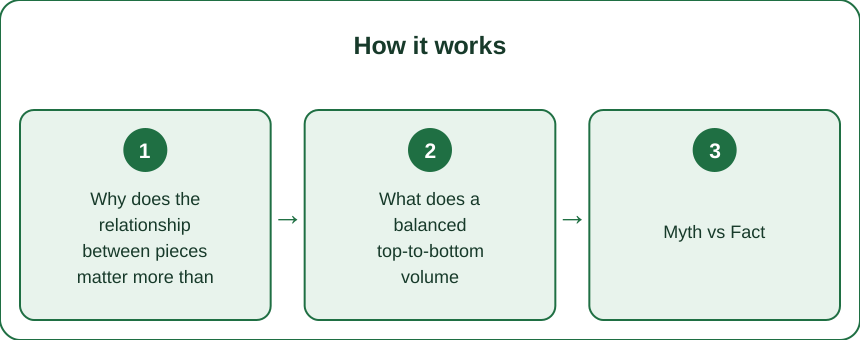
Why does the relationship between pieces matter more than individual fit?
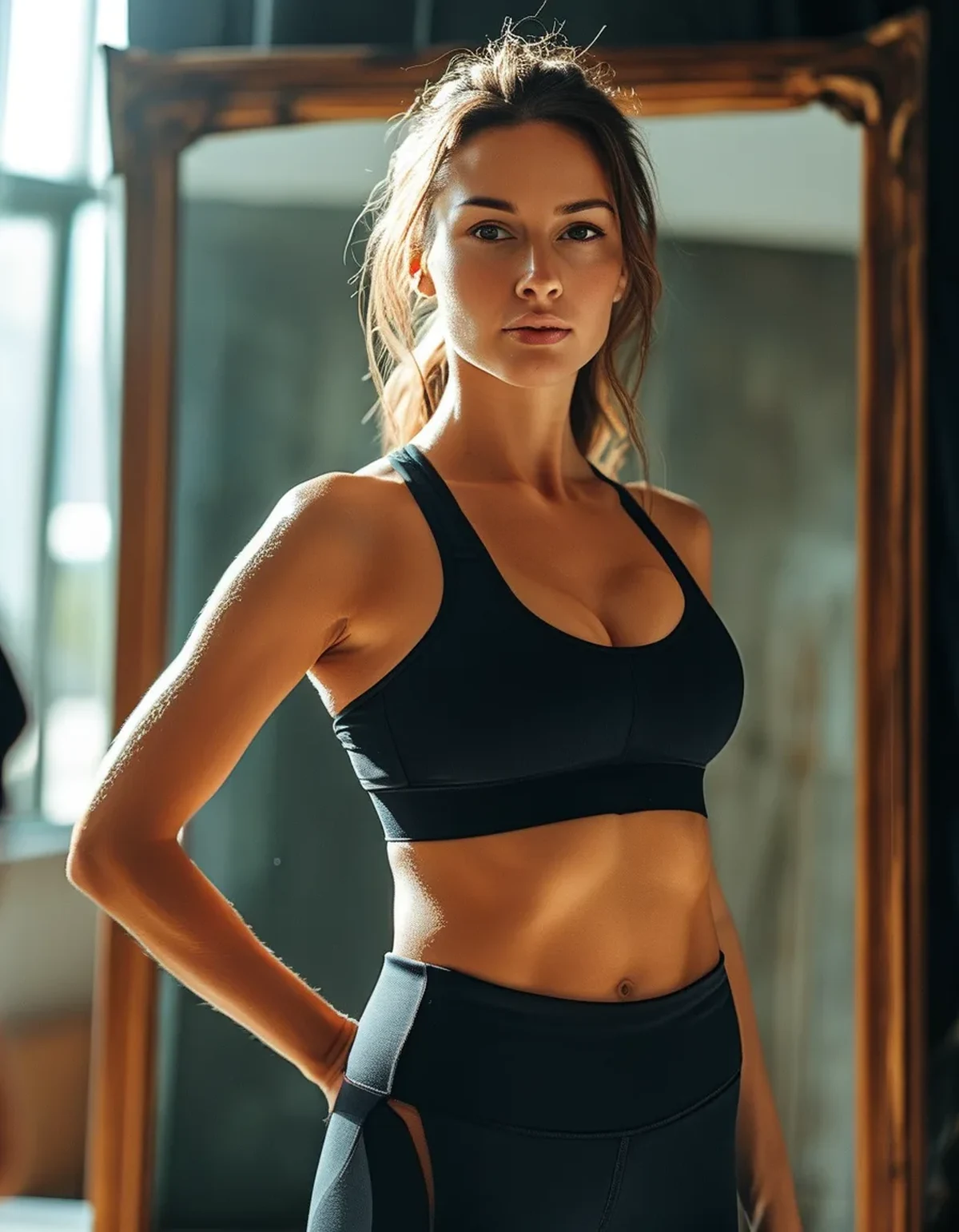
An outfit is read as a whole silhouette, not as separate top and bottom pieces evaluated independently - a well-fitted, fuller-volume top paired with a very fitted, minimal-volume bottom (or the reverse) creates an imbalanced overall shape even when each piece individually fits well. This is a proportion relationship problem, distinct from whether either piece fits correctly on its own.
Most sizing guides focus heavily on individual garment fit (does this top fit your bust, does this bottom fit your hips) without addressing how the chosen pieces relate to each other in overall volume - a genuinely separate consideration.
What does a balanced top-to-bottom volume relationship actually look like?
Pairing similar volumes - a fitted top with fitted bottoms, or a fuller top with fuller bottoms - creates a naturally balanced silhouette without requiring much additional styling thought. Intentionally contrasting volumes (a fuller top with fitted bottoms, or the reverse) can also look great, but it works best as a deliberate styling choice rather than an accidental mismatch, and often benefits from a defining element at the waist (a belt, a tuck) to make the contrast look intentional rather than like a fit issue.
The mismatch that reads as accidental, rather than intentional, usually happens when volumes differ significantly with no waist definition connecting them - the eye reads this as two separate pieces rather than one coordinated outfit.
Myth vs Fact: Curvy Body Proportion Balance
Myth: Fitted pieces always look more put-together than looser ones on a curvy body. Fact: Matched volume - fitted with fitted, or fuller with fuller - tends to look more balanced than fit level alone; a fuller top with fuller bottoms can look just as put-together as an all-fitted outfit.
Myth: Contrasting volumes (fitted top, loose bottom) should always be avoided. Fact: Contrast can look intentional and stylish specifically when connected with waist definition - it’s the lack of connection, not contrast itself, that reads as unbalanced.
Myth: This proportion rule only applies to very structured or formal outfits. Fact: It applies just as much to casual and athletic wear - a fitted top with baggy joggers versus a looser top with fitted leggings both follow the same volume-relationship logic.
How do you actually apply this when getting dressed day to day?
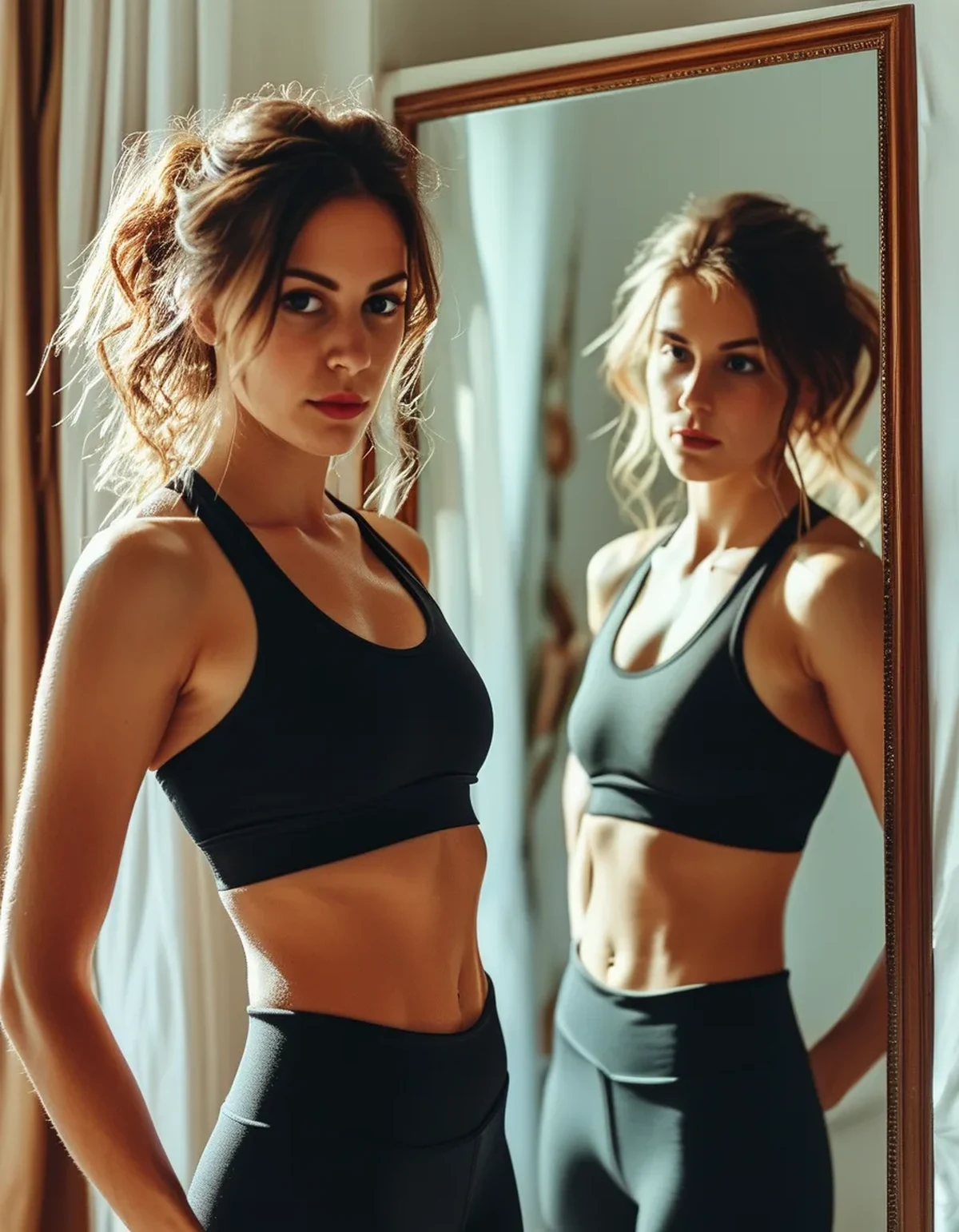
Before finalizing an outfit, step back and look at the overall silhouette in a full mirror, not each piece separately. If top and bottom volumes are noticeably different, add a waist-defining element - a belt, a tuck, a cropped layer - to connect them intentionally rather than leaving the contrast unaddressed.
For a simpler default that requires no extra styling decision, matching volume level between top and bottom removes this consideration entirely - a reliable, low-effort choice for busy mornings when you don’t want to think through a deliberate contrast.
FAQ: Curvy Proportion Balance Questions, Answered
Does this rule change based on which specific body areas are fuller (bust, hips, midsection)?
The core volume-matching principle stays the same regardless of where fullness is concentrated, though where you place a waist-defining element (natural waist versus higher, under-bust) can be adjusted to your specific proportions.
Is there a single ‘best’ volume pairing for curvy bodies broadly?
No single pairing works universally - both matched and intentionally contrasted volumes can look great; the point is choosing deliberately rather than pairing pieces without considering how their volumes relate.
Does outerwear (jackets, cardigans) factor into this volume balance too?
Yes - an outer layer’s volume should be considered alongside the base outfit, since a large jacket over an already-balanced top and bottom can shift the overall proportion again.
TL;DR:
- Outfit balance depends on how top and bottom volume relate, not just each piece’s individual fit
- Matched volume (fitted-fitted or full-full) creates an easy, naturally balanced default
- Contrasting volumes work well with a waist-defining element connecting them intentionally
- Step back and check the full silhouette in a mirror, not each piece in isolation
Individual garment fit is only half the equation - how those well-fitted pieces relate to each other in volume is the detail most sizing advice leaves out.
See It in Motion
Seen here: Racerback Tank Top - White — shop similar styles on bubblelime.com
Keep Reading
This article is for general informational and styling purposes only. Fit, sizing, and product availability may vary.