The Top-Half Fit Problem: Activewear for Broad Shoulders and a Fuller Bust
Quick Answer: Most brands grade tops from a single fit model, so the shoulder, bust, and torso length scale together at a fixed ratio. If your shoulders and bust do not sit in that ratio, no size fits — one measurement always compromises. The fix is choosing construction, not size: raglan or set-in-with-gusset sleeves, four-way stretch, and separate band-and-cup bras.
The size that fits your bust is tight across the shoulders. The size that fits your shoulders is a tent everywhere else.
This is not a body problem, and going up or down a size will never solve it — because the thing that is wrong is happening before the size chart.
Why does no size fit correctly?
Because of grading. A brand designs a garment on one fit model at one base size, then scales every measurement up and down by fixed increments to create the size run.
That scaling assumes your proportions stay constant as your size changes — shoulders, bust, and torso all growing at the same rate. For a lot of bodies that is roughly true. For anyone whose bust-to-shoulder ratio differs from the fit model’s, it breaks down.
What that produces in practice:
- Size up for the bust and you get a shoulder seam sitting halfway down your arm, restricting the overhead range you actually need
- Size down for the shoulders and you get strain lines across the bust, gaping between closures, and a hem that rides up
- Size for the shoulders and the armhole is too high and cuts in
A useful diagnostic: where does the shoulder seam sit? It should land at the outer edge of your shoulder bone. If the only size where your bust is comfortable has a seam past that point, the garment is graded against you and no amount of trying will fix it.
The answer is construction — some garment designs simply tolerate proportional variation far better than others.
Which constructions actually work?
This is the practical core of it. Learn to spot these on the hanger and shopping gets dramatically faster.
Raglan sleeves. The seam runs diagonally from the underarm to the neckline rather than sitting on the shoulder. There is no fixed shoulder point to sit wrong, so it accommodates a wide range of shoulder widths on the same body size. The single most useful thing to look for.
Underarm gussets. A diamond or triangular panel at the armpit that adds range without adding width elsewhere. Common in climbing and yoga tops, rarer in mainstream activewear, and excellent when present.
Four-way stretch, not two-way. Two-way stretches across only; four-way stretches in both directions, so it can accommodate a fuller bust without stealing length from the torso. Check the label — it is usually stated.
Princess seams or bust darts. Vertical shaping seams create room for the bust without widening the whole garment. Common in bras, less common in tops, and a strong signal of a better-drafted garment.
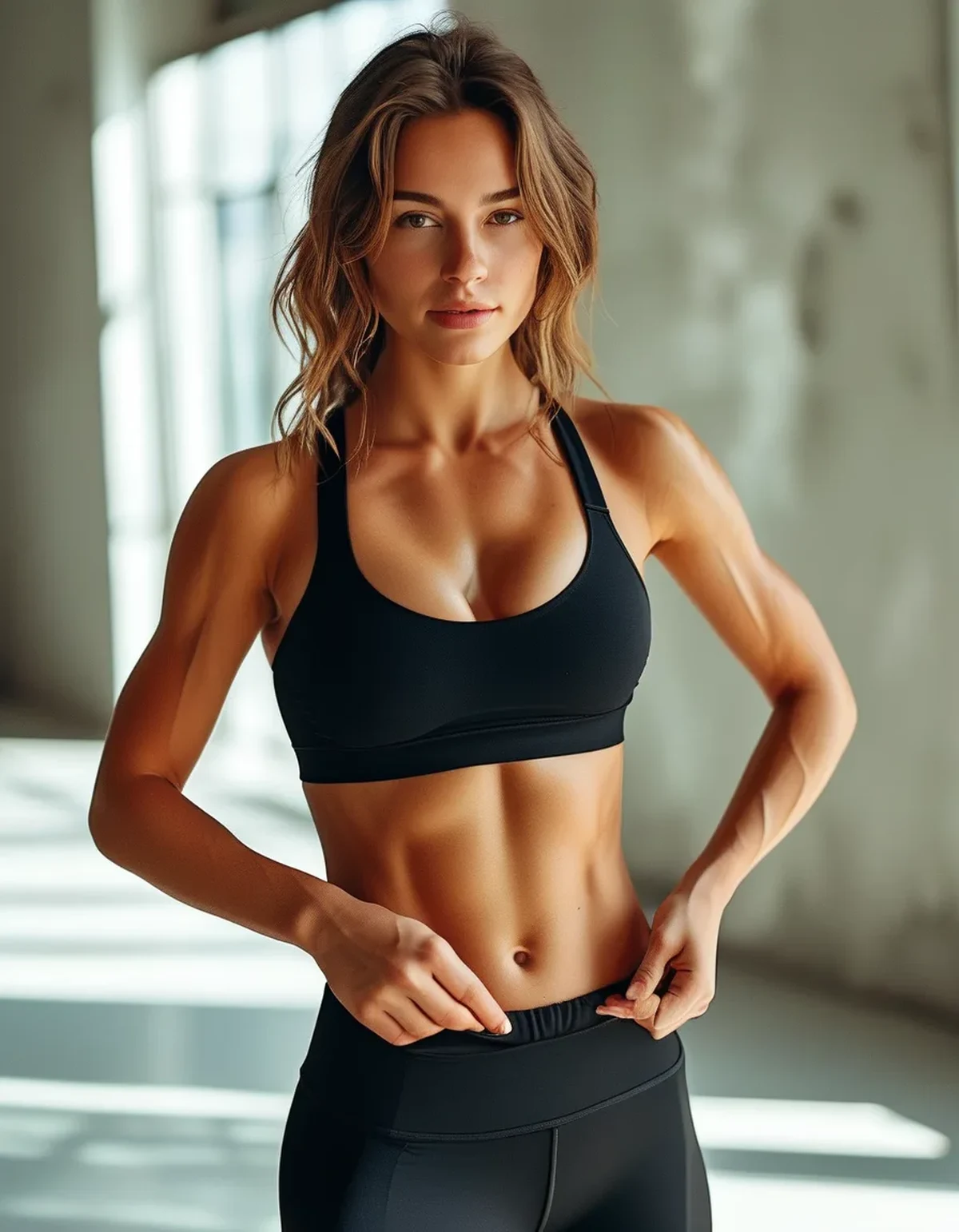
Racerback with a wide strap. Moves the strap inward off the shoulder point entirely.
What to avoid: rigid set-in sleeves with no stretch, woven non-stretch panels across the chest, and anything with a fixed horizontal chest seam, which is the first thing to strain.

What about sports bras specifically?
The same grading problem, with higher stakes — an ill-fitting sports bra affects comfort, support, and whether you enjoy the session at all.
Buy band and cup separately whenever possible. S/M/L sizing collapses two independent measurements into one number, which is exactly the problem this article is about. Brands offering 32D through 40G-style sizing are solving it properly.
The band does the work. Roughly 80 percent of support comes from the band, not the straps. It should be firm and level all the way around — if it rides up at the back, the band is too big regardless of how the cups feel.
Encapsulation over compression for a fuller bust. Compression bras flatten against the chest and work reasonably up to a point; encapsulation styles support each breast separately and control movement far better at larger cup sizes. Combination styles do both and are usually the best option for running.
Check the underarm cut. A high, narrow underarm cuts in on broader shoulders. A slightly lower, wider cut is more comfortable and does not reduce support.
Replace them at 6 to 12 months of regular use. The elastic degrades invisibly, and a stretched-out band provides much less support than it did while feeling roughly the same when you put it on.
What Nobody Tells You About Top-Half Fit
Sizing up is not the same as fitting. A larger size adds width everywhere, including the neckline, armhole depth, and torso length. You solve the bust and inherit four new problems. Construction is the variable, not size.
Torso length gets ignored entirely. Brands grade length with size, so sizing up for the bust also lengthens the top — which is why the hem sometimes ends up in a strange place. A long-torso or petite line, where available, solves this more effectively than changing size.
Fabric weight matters more than the size chart. A heavier compressive knit in your correct size frequently fits better than a thin one a size up, because the thin one shows every strain line and rides.
Squat and reach in the fitting room, always. Overhead reach reveals a too-tight shoulder immediately, and a top that fits standing still can restrict a press or a downward dog. If a top rides up when you raise your arms and stays up, the armhole or torso length is wrong.
Online returns are the actual strategy. Ordering two sizes with the intent to return one is normal and reasonable, and for this fit problem it is often the only way to compare. Check the return policy for worn-once items before ordering.
Brands vary enormously and inconsistently. A brand’s fit model can change between seasons, so a style that fit last year may not this year — which is genuinely frustrating and worth knowing rather than assuming something changed about you.
FAQ: Top-Half Activewear Fit, Answered
How do I know if it is the shoulders or the bust that is wrong?
Raise both arms overhead. If the top pulls at the underarm and restricts the movement, it is the shoulders or armhole. If it strains horizontally across the chest and creates lines between the bust points, it is the bust. If both, you need a different construction rather than a different size.
Are there brands that grade for this?
Brands offering separate band-and-cup sports bra sizing, and those with dedicated curve or full-bust lines, are drafting for it deliberately rather than scaling from one model. Beyond specific brands, filtering by construction — raglan sleeves, four-way stretch, princess seams — finds well-drafted garments across the whole market.
Should I get things tailored?
Activewear tailoring is difficult because of the stretch fabrics and specialized seams, and most alterations tailors decline it. The exception is shortening straps or a hem, which is straightforward. Put the effort into construction selection instead.
Is a compression top supposed to feel this tight?
Compression should feel firm and even, never restrictive of breathing or overhead movement. If you cannot take a full breath, cannot raise your arms, or it leaves deep marks and numbness, it is too small — that is not compression working, it is the wrong fit.
TL;DR: No size fits because the garment was graded from one fit model’s proportions.
- Check where the shoulder seam sits. Past the edge of your shoulder bone means the grading is working against you.
- Buy construction, not size: raglan sleeves, underarm gussets, four-way stretch, princess seams, wide racerback straps.
- Avoid rigid set-in sleeves, non-stretch chest panels, and fixed horizontal chest seams.
- For sports bras, buy band and cup separately. The band supplies about 80 percent of the support, and encapsulation beats compression at larger cup sizes.
- Sizing up adds length and armhole depth too — you trade one problem for several.
- Squat and reach overhead in the fitting room, every time.
- Replace sports bras at 6 to 12 months. The elastic fails invisibly.
Once you shop by construction rather than by size, the whole category gets much smaller and much better.
See It in Motion
Seen here: Racerback Tank Top - White — shop similar styles on bubblelime.com
Keep Reading
This article is for general informational and styling purposes only. Fit, sizing, and product availability may vary.