Why Straight-Size Scaling Fails Curvy Bodies (And What Proportional Sizing Actually Means)
Quick Answer: Most activewear brands ‘grade up’ a straight-size pattern by scaling every measurement equally, which ignores that curvier bodies often have a different ratio between waist, hip, and bust — proportional sizing (or true plus-size pattern development) adjusts that ratio specifically, which is why it fits more accurately than simple upscaling.
A size that technically ‘fits’ on paper can still feel wrong on the body — proportional sizing explains why, and it’s a pattern-design issue, not a personal fit issue.
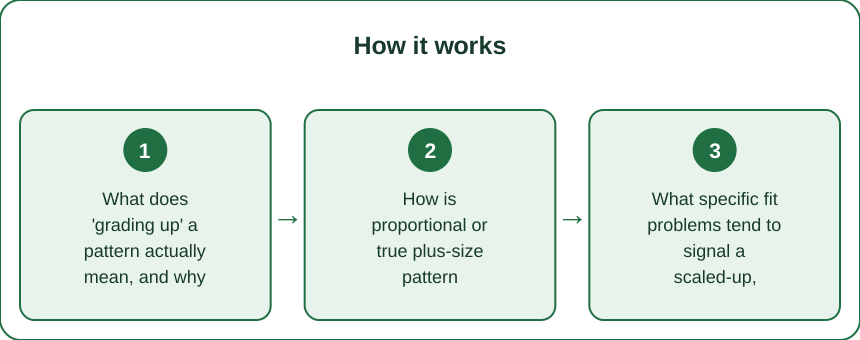
What does ‘grading up’ a pattern actually mean, and why does it cause fit problems?
Grading up takes a base pattern (usually developed for a straight-size body) and increases every measurement by the same proportional amount to create larger sizes — but real body proportions don’t scale uniformly as size increases, so a garment developed this way can fit the bust reasonably while being off through the waist or hip on many curvier bodies.
How is proportional or true plus-size pattern development actually different?
Rather than scaling one base pattern, true plus-size development uses actual body scan data at larger sizes to redraft the pattern’s proportions specifically — accounting for the fact that waist-to-hip ratio, rise length, and other proportions commonly shift in ways that simple scaling doesn’t capture.
What specific fit problems tend to signal a scaled-up, non-proportional pattern?
A waistband that gaps while hips fit well, a rise that feels too short specifically at larger sizes, or a garment that fits through the torso but pulls oddly at the hip are all common signals of simple upscaling rather than genuine proportional pattern development for that size range.
Myth vs Fact: Proportional Sizing in Activewear
Myth: A ‘good fit’ brand at smaller sizes will automatically fit well at plus sizes too. Fact: many brands only invest in proper pattern development up to a certain size range and simply scale beyond that point, so fit quality can genuinely drop off at larger sizes even from an otherwise well-fitting brand.
Myth: Fit problems at larger sizes mean the body is ‘hard to fit.’ Fact: often the pattern itself wasn’t developed for that body’s actual proportions — this is a design and manufacturing issue, not an issue with the wearer’s body.
Myth: All plus-size lines use proportional sizing just because they’re labeled plus size. Fact: labeling a size range ‘plus’ doesn’t guarantee the pattern was redeveloped rather than just scaled — it’s worth checking brand-specific fit reviews for this specifically.
FAQ: Proportional Sizing Questions, Answered
How can I tell if a brand actually uses proportional sizing before buying?
Looking for brands that explicitly describe developing separate patterns or using extended-size body scan data (rather than just ‘inclusive sizing’ language alone) and checking size-specific customer reviews are both more reliable than the size range itself.
Does proportional sizing mean every proportional-sizing garment will fit perfectly?
No — proportional sizing improves the odds of a better base fit compared to scaled patterns, but individual body variation within any size range still means fit isn’t guaranteed for everyone.
Is proportional sizing more expensive to produce, and does that affect price?
Generally yes — developing separate patterns for a wider size range requires more design and sampling investment than scaling one pattern, which is sometimes reflected in slightly higher prices for brands that do this properly.
TL;DR:
- Simple pattern ‘grading up’ scales every measurement equally, ignoring how body proportions actually shift at larger sizes
- True proportional sizing redevelops patterns using real body data at each size range instead of just scaling
- Waistband gapping or a too-short rise at larger sizes often signals scaled, non-proportional patterns
- Fit problems at larger sizes usually reflect a design gap, not a hard-to-fit body
Next time a fit feels off despite the ‘right’ size, it may be the pattern, not you — checking brand-specific reviews for your size range can save a return.
See It in Motion
Seen here: Crewneck Short Sleeve Workout T-Shirt — shop it on bubblelime.com
Keep Reading
This article is for general informational and styling purposes only. Fit, sizing, and product availability may vary.